Hanyangdoseong|
About the Capital Fortifications of Hanyang

Background and Role
Tangchundaeseong Fortress is a fortress completed in 1755 (the 31st year of King Yeongjo's reign) by royal order to connect Bukhansan Fortress and Hanyang City Wall in order to further strengthen the defense of the capital Hany
Tangchundaeseong: Then and Now
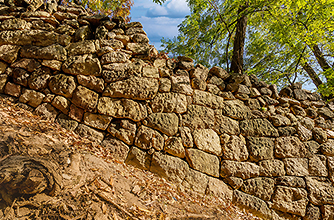
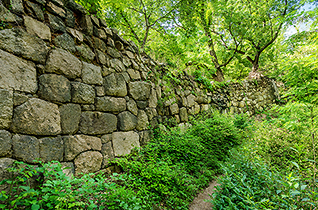
Tangchundaeseong Fortress was built along the steep mountain ridge connecting Inwangsan to Bibong Peak of Bukhansan, serving as a 'connective fortress' that unified Hanyang City Wall and Bukhansan Fortress into one system and protecting the western outer areas of the capital. The fortress walls were constructed by stacking stones only on the outer side according to the topography, which well demonstrates the fortress construction techniques of the late Joseon period in preparation for large scale cannon warfare. Tangchundaeseong Fortress is evaluated as a unique and rare heritage in Korean fortress history as a connective fortress linking the capital fortress and the inner fortress. In particular, King Yeongjo completed a large-scale capital fortress system connecting the capital— connecting fortress shelter fortress, and promulgated the Royal Edict on Defense (Suseongyuneeum) to the people, pledging to defend the capital together with military and civilian forces. The Capital Fortifications of Hanyan emonstrates the creative development of the Joseon Dynasty's capital defense system.
Since its completion, Tangchundaeseong Fortress has served as a key facility for capital defense in the late Joseon period, with detailed historical records continuing to be transmitted until the end of the Joseon Dynasty. Some facilities such as Hongjimun Gate and Ogansumun Gate were damaged during major floods in the 1920s, but through restoration work by Seoul Metropolitan Government in 1977, the fortress was restored to its present form. Currently, as a historic site and national heritage of the Republic of Korea, the Korea Heritage Service and Seoul Metropolitan Government are collaborating to promote its inscription as a World Heritage Site, while continuing systematic protection and management to ensure that the heritage's authenticity and integrity are fully transmitted to future generations.