Hanyangdoseong|
About the Capital Fortifications of Hanyang

HanyangHanyang City Wall: A Scientific Urban Defense System Built 600 Years Ago
The Hanyang City Wall is an 18.6 km long city wall built in 1396 to protect the capital. It is not simply a stone wall surrounding a mountain, but a 'living urban fortress' that combines thorough use of natural terrain with engineering design.
- 1. 1. The Wisdom of 'Pogoksik-style (包谷式)' that Embraces Mountain Valleys
-

The core of the Hanyang City Wall lies in the 'Pogok-style' construction method. Unlike the 'Teomoe-style' which builds walls only along mountain ridges, this method draws valleys into the fortified area and surrounds them. By keeping valleys inside the wall, it is easy to secure spring water that flows naturally within the fortress, and it creates spacious residential areas where people and soldiers can live. The Hanyang City Wall achieved a scientific balance by strategically utilizing natural terrain, blocking enemies from outside while enriching life within the fortress.
- 2. Evolution of Fortress Construction Technology
-
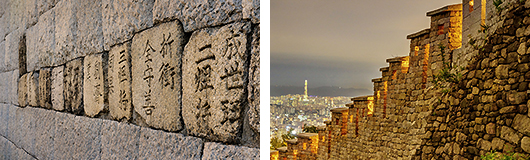
From Square Stones to Finished Stones: The method of constructing city walls varies by era. During the early period, natural stones were roughly finished and stacked for the wall, and later stones were finished into rectangular shapes to fit the joints precisely. Subsequently, stones were cut into nearly perfect squares, creating increasingly sturdy and smooth walls. By carefully examining the city wall, you can see at a glance the development of Joseon's stone masonry technology over 600 years.
- 3. Eight Gates Connecting Nature and the City
-
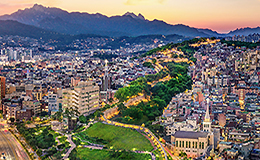
The fortress was connected to the outside through four major gates and four minor gates. The rugged mountain terrain became a natural defense barrier, and sturdy castle gates were erected at low passages to create transportation hubs. This demonstrates the sophisticated planning of fortress construction at the time, which aimed to maximize urban functions while respecting the natural topography.
The Hanyang City Wall is not merely a historic site.
The fortress walls that extend along the ridges of Baekaksan, Naksan, Namsan, and Inwangsan still embrace Seoul's urban structure and people's daily lives. This 18.6 km city wall is a massive engineering record left by our ancestors and a heritage that still breathes with us today.