Hanyangdoseong|
About the Capital Fortifications of Hanyang

Background and Role
Bukhansanseong is a fortress constructed in 1711 under the royal command to effectively defend Hanyang, the capital of Joseon, during the rapidly changing geopolitical circumstances of early modern Northeast Asia. Located on Bukhansan, a naturally fortified mountain to the north of Hanyang, it was strategically designed as a Ibpo-seong (shelter fortress)—a refuge where the reigning monarch, the administrative government, and the civilian population could relocate together to conduct prolonged defense operations.
Bukhansanseong : Then and Now
Bukhansanseong was constructed in just six months through the coordinated efforts of the three central military units defending Hanyang (the Hunyeongdogam, Geumwiryeong, and Eoyeongcheong) and the Buddhist military forces (Seunggun). The fortress features 16 gates and a total wall length of 11.6 km, following the rugged valleys and ridgelines of Bukhansan. With an internal area of approximately 5.2 km², Bukhansanseong ranks among the largest fortress constructions of the Joseon Dynasty.
Within its perimeter, Bukhansanseong contained diverse internal facilities for command, administration, and operations. Key structures included the Bukhan Haenggung (Royal Retreat Palace), where the monarch would reside and direct military operations during emergencies; the Gwanseongso (Fortress Administrative Office), responsible for overall management; branch offices of the three military units (Hunyeongdogam Yuyeong, Geumwiryeong Yuyeong, and Eoyeongcheong Yuyeong), which stored weapons and conducted training; emergency grain storage facilities (Sangchang, Jungchang, Hachang); command posts (Dongjangdae, Namjangdae, Bukjangdae); and the Jungheungsa, a Buddhist temple where the Seunggun Commander resided and coordinated defense. The Bukhan-ji (Records of Bukhansan), compiled in 1745 by the Seunggun Commander, provides detailed documentation of these internal facilities and their locations, explicitly confirming Bukhansanseong's role as a functioning shelter fortress.
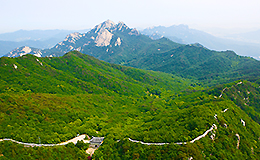
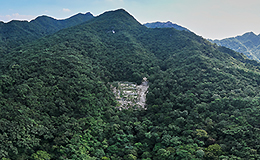
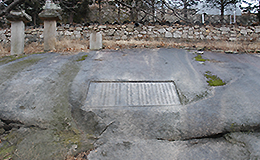
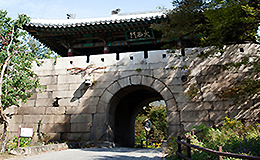
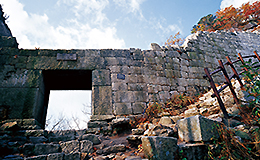
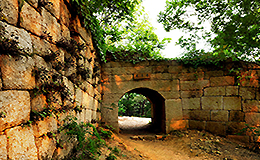
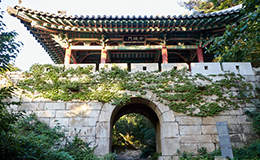
Following its construction, Bukhansanseong continued to serve its defensive function throughout the Joseon period. The Mangi Yeoran (Manual of Administrative Precedents), compiled in 1808 under royal command, and numerous historical maps confirm that Bukhansanseong functioned and was recognized as the primary shelter fortress protecting the capital. Although Bukhansanseong lost its original military function following the 1894 Gabo Reforms (which modernized the Joseon military structure) and later during the Japanese Colonial Period and Korean War, it is now preserved as a National Heritage Site of the Republic of Korea. The Korea Heritage Service, Goyang City, and Seoul Metropolitan Government continue to cooperate in ensuring that the fortress's authenticity and integrity are maintained and transmitted to future generations.